



Stone floors are a beautiful, long-lasting choice for many homes throughout the Seattle and Bellevue area. From elegant marble in a formal entryway to textured slate in a rustic kitchen, natural stone brings character, value, and durability to your interior floors. But like any surface in your home, stone floor tiles need regular cleaning and care to stay looking their best.
In this guide, we’ll walk you through how to clean stone floors properly, what to avoid, and how to make sure your natural stone floors stay in top shape for years to come. We’ll also cover specific product tips, common mistakes, and when it might be time to bring in a professional. Whether you’re cleaning stone flooring for the first time or trying to remove a tough stain, this resource has you covered.
Why Natural Stone Floors Need Special Care
Natural stone is different from man-made tile floors. Every slab has its own makeup, formed over millions of years. That makes natural stones beautiful and unique, but also more sensitive to common household chemicals. The way you clean natural stone tiles should be different than how you’d treat ceramic or porcelain. Using the wrong cleaning products or tools can damage the surface, dull the shine, or even strip the sealant.
Know Your Stone Type

Not all stone floors are created equal. Different stone types react differently to cleaning agents, moisture, and wear. Identifying your stone’s geological classification will help you understand what it needs. Here are the most common types found in homes:
Marble
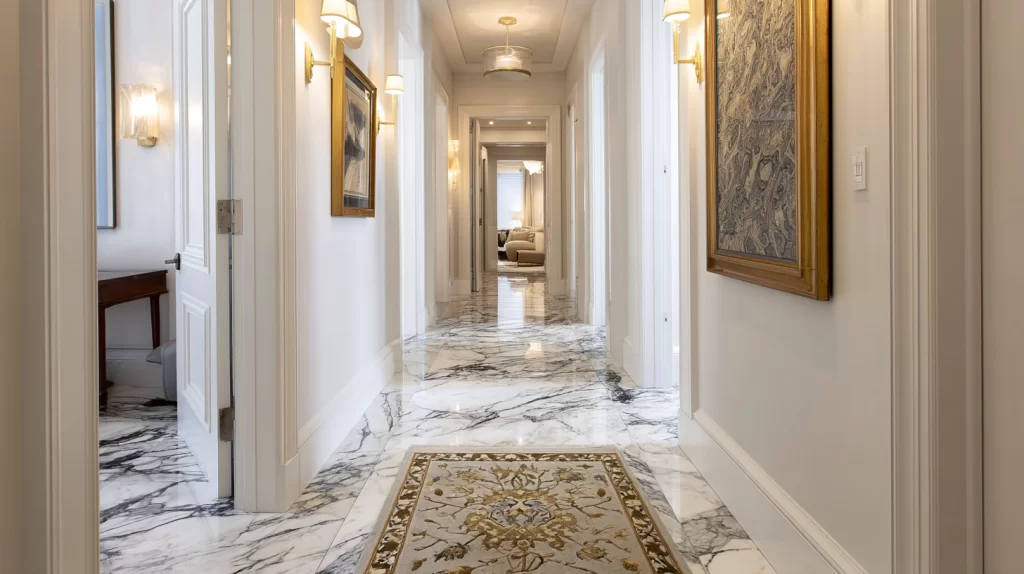
Soft, porous, and sensitive to acids, marble needs gentle cleaning and regular sealing to maintain its look.
Granite
Granite is one of the hardest natural stones. It resists scratching and staining but should still be sealed and cleaned properly.
Travertine
This natural stone has a textured, pitted surface that looks great but can trap dirt. Use extra care when cleaning travertine.
Limestone
Limestone is similar to marble and is also sensitive to acidic cleaners. It stains easily and needs sealing to stay protected.
Slate
With its slip resistant surface and rustic finish, slate is ideal for wet areas like hot tub areas, bathrooms, and outdoor pool decks.
Daily and Weekly Maintenance Tips

Sweep or Vacuum Often
Grit and dirt can act like sandpaper on stone surfaces. Dust mopping with a microfiber mop or using a vacuum cleaner with plastic attachments (no beater bar) helps remove dust and prevent scratches. Clean stone surfaces daily in high-traffic areas.
Use the Right Cleaner
The best way to clean stone floors is with a pH neutral cleaner specifically made for natural stone surfaces. Avoid toilet bowl cleaners, vinegar, and bleach. A few drops of mild liquid dishwashing detergent or mild soap in warm water can be a safe DIY option in a pinch, but over use may leave residue. For routine cleaning, stick with a commercial neutral cleaner designed for natural stone tiles.
Mix your cleaner with warm water in a bucket or spray bottle to create a gentle soap solution, then apply with a clean rag mop. Always rinse water frequently to avoid streaks and buildup.
Damp Mop the Right Way
Use a slightly damp mop to clean stone, not a soaking one. Excess water can penetrate grout lines and damage unsealed areas. After mopping, dry with a soft cloth to prevent water spots, especially on polished surfaces like marble or granite.
How to Deep Clean Natural Stone Tiles
Even with regular upkeep, stone floors need occasional deep cleaning. Here’s how to do it safely:
Step 1: Remove Loose Dirt
Vacuum cleaners with soft bristles or dust mops help pick up particles before deep cleaning. Pay close attention to grout lines, corners, and tiled floors near entryways.
Step 2: Apply a Stone-Safe Cleaner
Use a stone soap or pH neutral cleaner in warm water. Avoid mild bleach solutions, scouring powders, or anything containing hydrofluoric acid, which can cause etch marks or damage other minerals in natural stone.
Step 3: Mop and Rinse
Work in small sections. Mop with the soapy solution, then follow with fresh rinse water. Make sure to rinse water frequently to remove all residue.
Step 4: Dry Thoroughly
Use a soft cloth or towel to dry each section. This step prevents spots from forming as the water evaporates.
Stain Removal Tips for Stone Floors
Stains are tricky on natural stone floors because the surface can be porous. The right removal method depends on the type of stain:
Oil-Based Stains
Spills from cooking oil or greasy food should be blotted immediately with a paper towel. For stubborn stains, use a stone-specific poultice.
Rust Stains
Avoid using harsh rust removers unless they are approved for natural stone. Laundry rust stain removers or anything with acid attacks silicates can permanently damage some stone types.
Soap Scum
To remove soap scum from stone flooring in bathrooms or hot tub areas, use a pH neutral cleaner. Never use vinegar or toilet bowl cleaners, even if labeled “natural.”
What to Avoid When Cleaning Stone Floors

Acidic Cleaners
Vinegar, lemon juice, and commercial degreasers may seem like simple solutions, but they can cause etching on marble, travertine, and limestone.
Household Chemicals
Avoid multi-surface cleaners, ammonia solutions, and disinfectants not specifically formulated for stone. These can leave behind film, discolor natural stone surfaces, or degrade the sealant.
Abrasive Tools
Steel wool, scouring pads, and stiff brushes can leave scratches that eventually dull your floors. Even too much elbow grease can be a problem if you’re using the wrong materials.
Over-Wetting
Flood-mopping can lead to water absorption and mold growth in grout lines. Use just enough liquid to clean stone floors and always dry afterward.
How to Protect Your Stone Floors Long-Term
Seal Your Stone
Natural stone floors need to be sealed to resist stains. Unsealed stone absorbs liquids quickly, causing deep stains. Sealing makes the surface more stain resistant and easier to clean and maintain. Ask about our sealing services to protect your investment.
Use Rugs and Mats
In high-traffic areas, especially near a food preparation area, rugs and entry mats help trap dirt before it hits the floor. Choose non-slip mats that won’t scratch the stone surface.
Be Mindful of Furniture
Use furniture pads under chairs, tables, and heavy pieces to prevent scratching. Dragging furniture across stone flooring can cause chips and wear.
Clean Spills Immediately
Whether it’s wine, juice, or water from an outdoor pool area, blot it up right away. Waiting too long can allow the liquid to penetrate and stain natural stone tiles.
Special Considerations for the Pacific Northwest
Here in the Seattle area, wet weather is a part of life. That moisture makes maintenance even more important.
- Use entryway mats to reduce dirt and mud
- Clean stone flooring near doors and windows more frequently
- Keep an eye out for algae or mold growth, especially in shaded or damp spots
- Use a neutral cleaner regularly in wet areas like bathrooms and kitchens
- Never allow standing water to sit on stone floors or in grout lines
When to Call a Professional
Sometimes, even the best DIY cleaning routine can’t bring back the original beauty of your stone floors. Here are signs it’s time to get professional help:
- Persistent stains that won’t lift
- Dull spots that look like etching
- Grout discoloration
- Surface feels rough or uneven
- You’re unsure if the stone is sealed
At Best Floor Coverings, our team can deep clean, seal, and even restore damaged natural stone flooring. With our convenient shop-at-home service, we come to you and assess your stone type, condition, and needs in person.
FAQs About Cleaning Stone Floors
What is the best way to clean natural stone floors?
Use a pH neutral cleaner, warm water, and a microfiber mop. Avoid acidic or abrasive cleaners.
Can I use vinegar or bleach on stone floors?
No, acidic cleaners like vinegar and harsh products like bleach can damage natural stones.
How often should I clean stone floors?
Sweep or vacuum daily and damp mop weekly. Deep clean monthly or as needed based on traffic.
How do I know if my stone floors need sealing?
Do the water droplet test. If the water is absorbed quickly, it’s time to reseal.
Are steam mops safe for stone floors?
We don’t recommend steam mops for natural stone tiles. The heat and moisture can damage sealants and encourage mold.
Final Tips for the Longest Life Possible
- Stick to neutral cleaners
- Use rugs to protect high-traffic zones
- Dry after mopping to prevent water stains
- Schedule professional sealing every few years
- Never use abrasive or acidic products
By following these simple tips, you can keep your natural stone flooring looking fresh and beautiful for decades. Remember, stone may be tough, but it’s not invincible. The right care goes a long way.
Need Help with Stone Floor Maintenance?
Best Floor Coverings has proudly served homeowners across Seattle, Bellevue, and the surrounding communities with expert flooring services, including installation, cleaning, sealing, and restoration of natural stone floors. Whether you need help removing a stubborn stain, cleaning natural stone tiles, or resealing your floors, our team is just a call away.