


Everything Homeowners Need to Know
Got a concrete subfloor and wondering what kind of flooring you can put over it? You’re in the right place. Whether you’re building a new home in Kirkland or remodeling a basement in Bellevue, many homeowners are working with concrete slabs, and the good news is, yes, flooring can definitely be installed over concrete, but the success depends on choosing the right flooring types and following a thorough installation method. At Best Floor Coverings we help you choose the right flooring for your concrete slab, and we handle every detail, from testing and prepping the surface to installing and finishing your new floors with confidence.
What You Need to Know Before Installing Flooring Over Concrete
Understanding Concrete Slabs in Homes
Concrete slabs are common in many homes, especially in basements, garages, ground level rooms, and even some main living levels. A concrete slab acts as the structural base and must perform as a stable foundation for whatever flooring you choose. The condition of the concrete substrate and how it is prepared is critical for your flooring success. According to industry guidance, a concrete slab must be flat, dry, free of contaminants and meet minimum strength requirements to properly support flooring materials. For homeowners asking can flooring be installed over concrete, this means it’s not just about picking a product – it’s about making sure that concrete slab is ready for what’s coming on top of it. It’s also important that the concrete surface is smooth to ensure proper adhesion and a flawless finish.
Why Moisture Is the #1 Concern
When you install flooring over concrete, one of the biggest risks is moisture. Concrete by nature can let moisture migrate upward or hold onto water, and if excessive moisture is present, it can lead to moisture‑related issues such as warping, buckling, adhesive failures or mold growth under wood flooring or laminate floors. According to the National Wood Flooring Association, the concrete slab must be dry, moisture testing must be conducted, and a vapor retarder (often a vapor barrier) is strongly recommended for installations of wood flooring over concrete. Homeowners in the Seattle/Bellevue region may also contend with humidity, cold slab conditions and basement setups; so ensuring proper moisture control is one of the biggest pain points we solve with our full‑service approach. Since many flooring options (engineered hardwood, laminate flooring, luxury vinyl plank) promise moisture‑resistant properties, we still need to manage the concrete slab’s inherent risks.
Surface Condition, Flatness and Cleanliness Matter
Beyond moisture control, the physical condition of the concrete slab or concrete subfloor matters a lot for your new flooring. The slab should be flat within industry tolerance (for example 3/16″ over a 10‑foot span), clean, free of oil, dust, old adhesives or sealers, and free of structural cracks or loose areas. If the slab is uneven, you’ll want subfloor prep such as grinding or patching low spots. If you skip this step, you risk your flooring materials (whether laminate floors, engineered hardwood flooring, or vinyl flooring) showing joint gaps, movement or even failure. For our customers, we always include a slab inspection and leveling plan as part of our “installation over concrete” workflow so you don’t have to worry about these hidden issues. We often collaborate with your general contractor to ensure all subfloor preparations meet the highest standards.
Best Types of Flooring for Concrete Slabs

Luxury Vinyl Plank (LVP) / Vinyl Flooring
Vinyl flooring, especially luxury vinyl plank, is often one of the best choices when dealing with a concrete slab. According to recent sources, some of the top flooring options to install over concrete include luxury vinyl flooring (LVP or LVT) because of its durability and moisture resistance.
Advantages:
- It’s moisture resistant and stable even when placed over concrete.
- It can be installed as a floating floor (no nails or glue in some cases) which helps reduce risk.
- Provides a cost‑effective solution and works well in high traffic areas and wet areas such as basements or at‑grade rooms.
- Highly durable and scratch resistant, making it ideal for busy households.
Considerations:
- Though it handles moisture better than many wood‐based products, you still must ensure proper subfloor/prep (flatness, moisture barrier) so that your new floor performs well.
- For best results you might still install an underlayment or foam pad to address comfort, sound and minor slab irregularities.
Laminate Flooring
Laminate flooring is another viable option for concrete subfloors when done correctly. Laminate floors mimic wood (or sometimes tile) and can be easier to install and more cost effective. According to installation guides, laying laminate flooring on concrete starts with cleaning and leveling the concrete floor, testing for moisture levels via a moisture meter, installing a moisture barrier if needed, and then placing the underlayment and laminate planks.
Advantages:
- Cost effective, wide variety of styles, often easy installation (click lock systems).
- When paired with a moisture barrier + proper underlayment, they perform well over concrete slabs.
- Scratch resistant surface provides lasting beauty even in high traffic areas.
Considerations:
- Less forgiving than luxury vinyl when moisture is elevated, so you must strictly adhere to moisture limits.
- Underlayment and moisture barrier must be suited to the concrete subfloor conditions.
Engineered Hardwood Flooring / Engineered Hardwood / Engineered Wood / Engineered Wood Flooring

For homeowners who want the look of real wood but want a more moisture‑resistant and stable product than traditional solid hardwood, engineered hardwood flooring (also called engineered hardwood or engineered wood flooring) is a great choice when installing over a concrete slab. Many sources list engineered hardwood as one of the best flooring types for concrete subfloors.
Advantages:
- Real wood veneer over a stable core gives you the wood look while reducing expansion/contraction issues.
- Can be installed via floating floor method (depending on product) or direct glue-down depending on manufacturer.
- When glued down with a notched trowel and proper adhesive, it offers a highly durable and smooth finish.
Considerations:
- Solid hardwood (real hardwood, solid wood flooring) is more sensitive to moisture and often not recommended for below grade concrete slabs. According to hardwood installation guides, solid hardwood floors may only be installed over concrete slab when the slab is at or above grade, sufficiently dry, and a proper vapor retarder is used.
- Engineered wood flooring over concrete still demands proper moisture control, flatness, and prep; the installation method might be glue‑down, floating, or nail‑down depending on product and substrate.
Solid Hardwood / Solid Wood Flooring
Solid hardwood flooring (real hardwood) offers an elegant timeless look, but when it comes to concrete slabs, installation can be more complicated. According to industry sources, solid hardwood floors can be installed over concrete slab if the slab is dry, at or above grade, and a proper subfloor structure plus vapor barrier is provided.
Advantages:
- The authentic natural look of real hardwood, high perceived value.
Considerations:
- Not ideal for below‑grade slabs (basements) because moisture and temperature fluctuations affect solid wood more severely.
- Requires more robust installation method: often plywood subfloor, sleeper system or detailed vapor retarder.
- Greater sensitivity to moisture levels, expansion gaps, seasonal changes and may not be the most cost‑effective when slab conditions are less favourable.
Tile or Stone
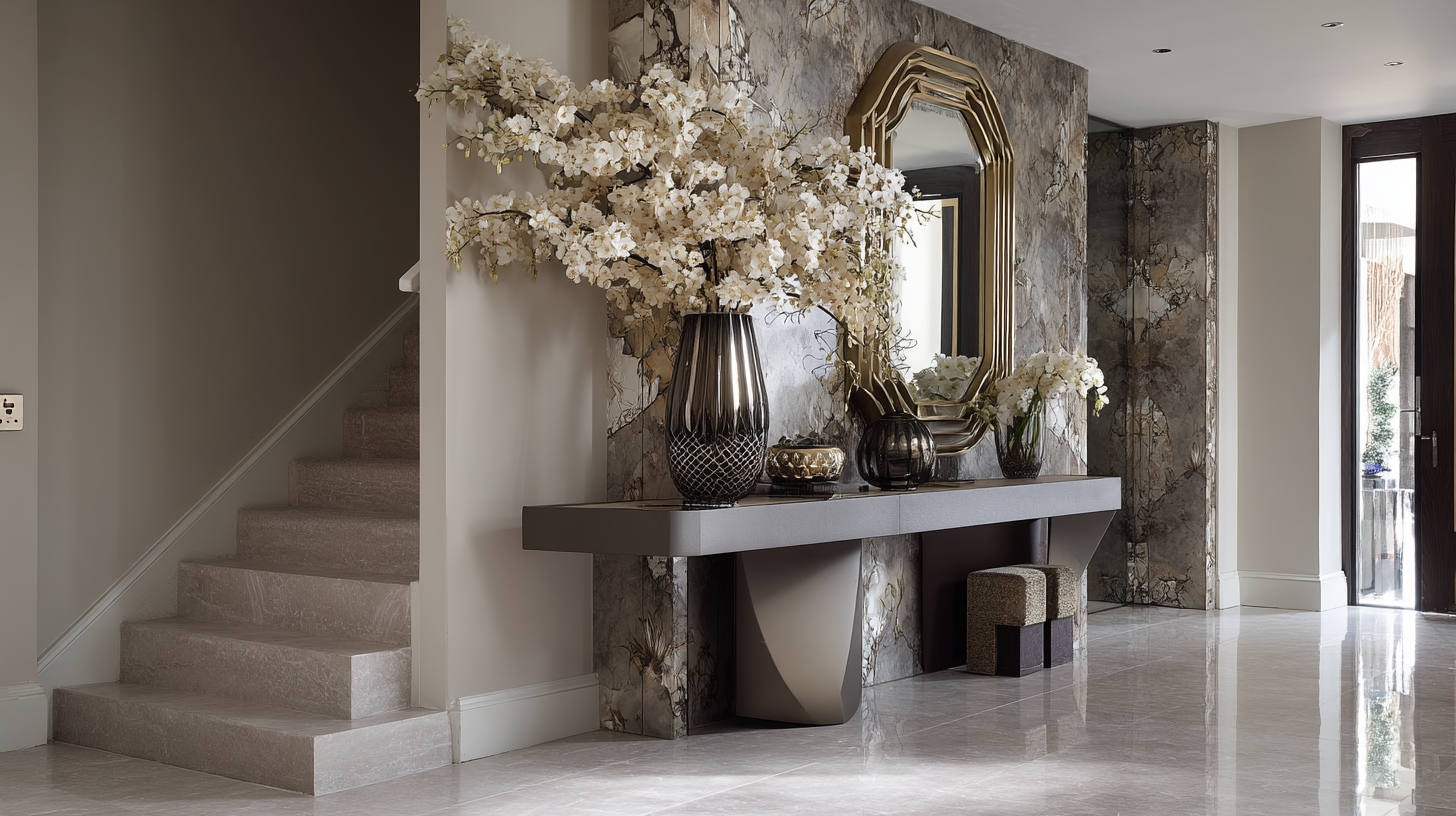
While not always covered in depth in basic home install guides, tile or stone flooring is a strong option for concrete slabs thanks to the inherent compatibility with concrete as a substrate. When slabs are level, clean, and dry, tile installation over concrete can be excellent in wet areas or high traffic zones. According to guidance the concrete subfloor must be adequately prepared and may require an uncoupling membrane if significant movement or cracking is a concern.
Advantages:
- Excellent moisture resistance, durability, ideal for wet areas such as bathrooms or basements.
- Very long lifespan when properly installed.
Considerations:
- Concrete slab must be very flat; tile is less forgiving of surface irregularities.
- May feel colder underfoot compared to wood or vinyl (especially over concrete).
- Installation complexity and cost may be higher.
Carpet
Carpet is less often discussed in relation to concrete slabs, but it can still be a good choice for comfort, warmth and insulating a room with a concrete subfloor. When installing carpet over concrete you must ensure there is a moisture barrier or waterproof padding and proper subfloor preparation. According to recent guides, carpet can be installed over concrete subfloors if the right moisture protection is in place.
Advantages:
- Soft underfoot, good for comfort in living and basement spaces.
- Adds insulation and sound reduction over concrete slab.
Considerations:
- You still need to manage moisture issues: without a proper moisture or vapor barrier, moisture can get trapped under carpet and cause mold or mildew.
- Not as durable as hard surface flooring in high traffic areas or wet zones.
Step‑by‑Step: How We Install Flooring Over Concrete

Step 1 – In‑Home Assessment & Moisture Testing
Every project with us starts with a free in‑home consultation. We bring the flooring showroom to you, show you flooring options, assess your space and examine your concrete slab or concrete subfloor. We check moisture levels using a moisture meter, look for evidence of dampness, assess temperature fluctuations common in your home, and evaluate the flatness and condition of the slab. According to substrate preparation guidelines, testing for moisture and ensuring dryness is essential before installing wood or wood‑based materials over concrete. Once the assessment is done, we outline recommended flooring options based on your slab condition, your style and your budget. We also give you a clear plan for any necessary slab prep, moisture barrier installation, or leveling work.
Step 2 – Slab Preparation
Proper slab prep is essential for success. That includes cleaning, leveling, repairing, and installing a vapor barrier or moisture barrier if needed. For example, installation guides for laminate flooring on concrete say you should clean the concrete floor, level high or low spots and install a moisture barrier over the slab before installation of the flooring.
Key prep work we handle:
- Remove old adhesives, coatings, paint, dirt or contaminants from the concrete substrate.
- Use a straightedge to check for flatness; grind high spots and fill low spots with a leveling compound. Many manufacturer tolerances call for minimal deviation in the concrete slab.
- Install a vapor barrier or moisture barrier (such as 6 mil polyethylene film) when required, especially before installing wood flooring. Many installations of engineered hardwood over concrete use a moisture barrier layer.
- Check that your concrete slab has adequate strength, is free from structural defects, and is ready for the flooring materials that will go on top.
Step 3 – Choosing the Right Floor for Your Home
After slab prep, now it’s about selecting the right flooring material and installation method. We evaluate what works best in your space given the slab conditions, moisture risk, temperature fluctuations, and your lifestyle (family, pets, high traffic areas, basement, above‑grade). We’ll discuss options like modern laminates, luxury vinyl, engineered hardwood, solid hardwood, tile and carpet – and help you understand which make sense given your concrete slab. Because when you ask can flooring be installed over concrete, the answer depends a lot on choosing the right flooring and method based on your concrete substrate condition. We’ll also show you samples of flooring options under your home’s lighting so you can see exactly how they’ll look in your space and make an informed decision. This ensures that the new flooring isn’t just technically sound but also suits your style and budget.
Step 4 – Professional Installation
Once you approve the flooring and we’ve completed the prep work, our certified installers take over. We handle the actual installation with precision. If installing laminate flooring or luxury vinyl over concrete, we may use a floating floor installation method (click lock systems) over an underlayment and moisture barrier. This means the flooring “floats” over the concrete substrate and isn’t glued or nailed directly. That method helps accommodate slight movement and minimizes risk of adhesive failure.
According to experts installing floating engineered hardwood floors on concrete slab, you should leave an expansion gap, stagger joints, and maintain proper installation spacing. For engineered hardwood or solid hardwood installed over concrete, the installation method might involve glue‑down or nail‑down to a plywood underlayment or sleeper system over the slab. Regardless, our team handles everything: measuring, cutting, fitting transitions, installing baseboards, ensuring expansion gaps, and giving you full care instructions. Once installed, we walk you through how to care for your floors, what to monitor (especially in slabs with moisture or temperature fluctuation risks), and how to keep your floors looking their best for years to come.
Why Homeowners Trust Best Floor Coverings for Concrete Slab Installations
As a family‑owned flooring company based in Kirkland and serving the greater Seattle and Bellevue area, we’ve handled hundreds of installations over concrete slabs. We bring the flooring store to your door with our convenient shop‑at‑home service. We’re experienced at assessing concrete slabs, managing moisture, handling subfloor repairs and installing high quality flooring materials with professional craftsmanship. We believe in a customer‑centric, friendly and trustworthy approach. We explain every step, offer you the best flooring options for your slab conditions and lifestyle, and handle everything from evaluation through final installation. Whether your space is a basement, main floor over slab, or a garage conversion, we provide flooring solutions with durability, style, and longevity in mind.
FAQs About Flooring Over Concrete
Can I put wood floors directly on concrete?
You can, but with conditions. For wood flooring (especially solid wood flooring) the concrete slab must be at or above grade, very dry, and you must install a proper vapor barrier and possibly a subfloor system over the slab. According to woodworking installation guidelines, installing solid hardwood floors directly over concrete is only recommended under those specific conditions. For engineered hardwood the process is a bit more forgiving, and many products allow floating floor installation over concrete slabs when the moisture and flatness conditions are met.
What’s the best flooring for a concrete basement?
In a basement (which is usually a slab below or partially below grade and subject to moisture and temperature fluctuations), the best flooring solutions are those that are moisture resistant and can handle slab conditions well. That points to luxury vinyl flooring, laminate flooring (with proper moisture barrier), tile, or engineered hardwood designed for slab installation. The key is to handle moisture properly, use a moisture barrier, and choose suitable materials. Sources note that luxury vinyl and laminate are top picks for concrete subfloors in these situations.
Do I need a vapor barrier on concrete?
Almost always, yes, especially when installing wood flooring, engineered hardwood or laminate over a concrete slab. Installing a vapor barrier or moisture barrier helps prevent moisture from migrating upward through the concrete slab and damaging your new flooring. The NWFA checklist for concrete subfloors strongly recommends a vapor retarding membrane with a perm rating of .13 or less. Even with luxury vinyl flooring, while some types allow more flexibility, many installers still recommend checking slab moisture and installing an appropriate barrier to protect floor warranties.
What if my concrete floor is uneven?
If the concrete subfloor or slab is uneven, has high spots or low spots, you’ll want to level it before installation of the chosen flooring material. Uneven slabs lead to visible joints, cracked tiles, buckled laminate or poor fit of wood flooring. Slab leveling and surface preparation is a standard part of the process for installing new flooring over concrete. At Best Floor Coverings we handle the leveling, grinding, patching and prep so you can move forward with confidence.
Ready to Install Flooring Over Your Concrete Slab?
If you’ve been asking can flooring be installed over concrete, the answer is yes, with the right preparation and the right flooring solution. Whether you’re interested in luxury vinyl plank, engineered hardwood flooring, laminate flooring, tile, or carpet over a concrete slab, our team can help you evaluate your slab, choose the right flooring type for your space and install it professionally. Schedule your free in‑home estimate today and let’s get started. We’ll help you choose the right floors, prep your concrete subfloor, handle moisture barriers, and install everything to perfection. Let’s transform your concrete slab into a beautiful, durable floor you’ll love for years to come.